The Causes of Climate Change

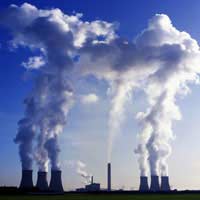
Although it could be argued that climate change has been a natural and frequently occurring phenomenon over the recordable history of planet Earth, scientists, politicians and individuals have largely agreed recently that the practice of releasing harmful 'greenhouse gases' into the atmosphere is contributing to global warming. These gases absorb the reflection of the sun from the Earth's surface, trapping heat within the atmosphere, and therefore causing 'global warming'. Whilst there are natural gases that have this effect such as (carbon dioxide, methane, nitrous oxide, and ozone), it is man made greenhouse gases that pose a threat to the environment, due to the huge increase in their production since the industrial revolution. Whilst man made gases, such as carbon dioxide, occur naturally, the increase in emissions of carbon dioxide (carbon emissions) due to human activity, could have a detrimental effect on the environment.
Greenhouse Gases
The gases considered to be most dangerous, and those that could be reduced by changing the ways in which people source their energy are: Carbon Dioxide (C02), Methane (CH4) and Nitrous Oxide (N2O), that have increased (respectively) 31%, 150% and 16% since the mid 18th Century. Other gases that are considered harmful to the atmosphere include: Hydrofluorocarbons (HFCs), Perfluorocarbons (PFCs) and Sulphur hexafluoride (SF6).- Carbon dioxide is produced by the burning of fossil fuels in the production of electricity, and during fuel consumption for land, sea and air transport. Carbon Dioxide is considered to be the main contributor to the build up of green house gases.
- Hydrofluorocarbons are found in fridges, aerosols and other perfumed and/or cosmetic products.
- Methane and Nitrous Oxide are produced as part of agricultural practice, in the burning of crops, the adding of nitrogen to crop soil to aid fertilization and in waste combustion. They are the second and their biggest contributor to the build up of green house gases.
- Sulphur Hexafluoride and Perfluorocarbons are man made chemical used in the manufacture of electrical goods
Other Causes of Climate Change
There are other causes to climate change which are entirely natural, including variations in the earth's orbit, which take place over tens of thousand of years and affect the distance of the earth from the sun and the release of natural greenhouse gases. Because global warming has a cumulative effect (i.e. a small increase in temperature will trigger a larger increase), an increased natural release in greenhouse gases, could in itself lead to a dramatic change in climatic conditions, relatively quickly.- After Kyoto? A new Climate Change Deal
- A New Leadership: Gordon Brown and Climate Change
- Climate Change: Signs in Britain Today
- India and China: Modernisation And Carbon Emissions
- Kyoto Carbon Emission Targets: Are They Being Met?
- The Climate Change Debate Explained
- The Consequences of Climate Change
- The History of Climate Change
- Helping to Prevent Climate Change

Re: Quiz: How Green is Your Life?
I appreciated this quiz because I discovered that with myself I can change something
Re: Quiz: How Green is Your Life?
Between 20-34 points You demonstrate a good environmental conscience – but there’s still room for improvement, so look at the…
Re: Quiz: How Green is Your Life?
I have got 25 points and I think it is okay, I feel good about it
Re: Quiz: How Green is Your Life?
I have 27 points and I think it's not bad but it could have been better.
Re: Quiz: How Green is Your Life?
I have 29 points, in my opinion it is quite a lot but on the other hand it could be better
Re: Quiz: How Green is Your Life?
I got 26 points so I think it's not bad but it could have been better. I will try to improve and live differently and better
Re: Quiz: How Green is Your Life?
Good check list and was happy to score high on most points. But I guess that is the case for most environmentally conscious folks…
Re: Fossil Fuel Debate
i have debate on consumption of fossil fuels. can you help me.
Re: Quiz: How Green is Your Life?
I am just wondering why tourism was left off your list? Surely unnecessary travel, needless environmental degradation, unabated…
Re: Fossil Fuel Debate
I am doing a debate about why fuel is good and this doesn't really help me.